

Are you looking to improve your wealth and achieve your financial goals? Financial consulting can provide the expert guidance and personalized strategies you need to navigate the complexities of wealth management. Learn how working with a financial advisor can help you make informed decisions about investing, retirement planning, estate planning, and more, ultimately leading to a more secure and prosperous financial future.
What Does a Financial Consultant Do?

A financial consultant provides expert advice and guidance on various financial matters to individuals and businesses. Their role encompasses a broad spectrum of services tailored to clients’ specific needs and goals.
Core responsibilities often include developing financial plans, managing investments, offering retirement planning strategies, and assisting with tax optimization. They analyze clients’ financial situations, identify opportunities for growth, and mitigate potential risks.
Beyond these core functions, financial consultants may also offer advice on estate planning, insurance, and debt management. They act as a trusted advisor, helping clients make informed decisions to achieve their long-term financial objectives.
The level of specialization varies; some consultants focus on a particular area like retirement planning or investment management, while others provide holistic financial services.
The Difference Between a Financial Consultant and a Financial Advisor
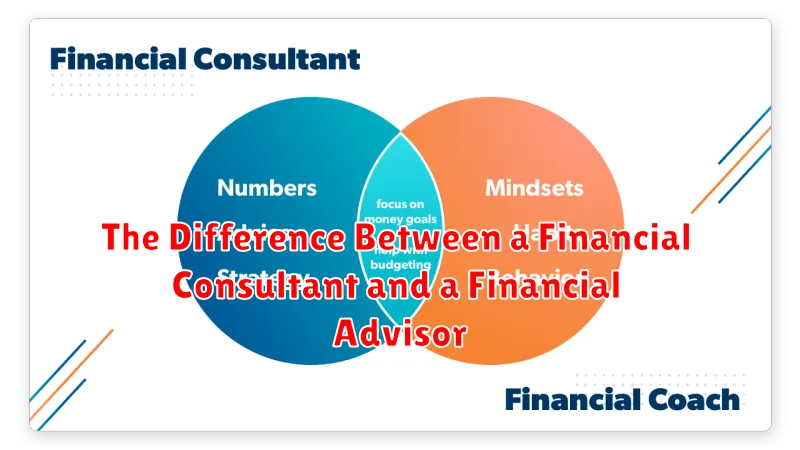
While the terms “financial consultant” and “financial advisor” are often used interchangeably, there’s a key distinction. A financial advisor typically provides ongoing financial planning services, such as retirement planning, investment management, and tax planning. They often hold certifications like a CFP (Certified Financial Planner) or ChFC (Chartered Financial Consultant).
A financial consultant, on the other hand, usually provides specific, project-based advice. This might involve a one-time consultation on a particular financial issue, such as estate planning or business valuation. They may or may not hold specific financial certifications, depending on their area of expertise.
In short, a financial advisor offers a broader range of ongoing services, while a financial consultant focuses on providing specialized advice for specific situations or projects. The choice between the two depends on your individual needs and the type of financial guidance you seek.
How to Choose the Right Financial Consultant

Selecting the right financial consultant is crucial for achieving your wealth goals. A poorly chosen advisor can lead to lost opportunities and even financial setbacks. Therefore, a thorough vetting process is essential.
Begin by clarifying your financial needs. Are you looking for retirement planning, investment management, tax advice, or estate planning? Understanding your requirements will help you identify consultants specializing in the relevant areas.
Next, investigate potential candidates. Check their credentials and experience. Look for certifications like CFP (Certified Financial Planner) or CFA (Chartered Financial Analyst). Verify their professional affiliations and check for any disciplinary actions or complaints lodged against them.
Consider their fees and compensation structures. Understand how they are paid – commission-based, fee-only, or a hybrid model. Transparency in fees is crucial for avoiding hidden costs and potential conflicts of interest.
Schedule initial consultations with a few shortlisted candidates. This allows you to assess their communication style, their understanding of your situation, and their ability to explain complex financial concepts clearly. Trust and rapport are essential components of a successful advisor-client relationship.
Finally, always obtain references and check them. Talking to previous clients can provide valuable insight into their experience and the consultant’s overall performance. Choosing a financial consultant is a significant decision; taking the time to conduct thorough research will significantly improve your chances of finding the right partner to help you build and manage your wealth.
Key Financial Metrics to Track

Tracking key financial metrics is crucial for understanding your current financial health and making informed decisions about your future. A financial consultant can help you identify and monitor the most relevant metrics for your specific circumstances. Here are some essential ones:
Net Worth: This is the difference between your assets (what you own) and your liabilities (what you owe). Regularly calculating your net worth provides a clear picture of your overall financial position.
Cash Flow: This metric tracks the inflow and outflow of money. Understanding your cash flow helps you manage expenses, identify areas for savings, and plan for future investments.
Debt-to-Income Ratio (DTI): This ratio shows the percentage of your gross monthly income that goes towards debt payments. A high DTI can indicate financial strain and may impact your ability to secure loans or credit.
Savings Rate: This represents the percentage of your income that you save each month or year. A consistent savings rate is essential for building wealth and achieving financial goals.
Return on Investment (ROI): This metric measures the profitability of your investments. Tracking ROI helps you evaluate the performance of your portfolio and make informed investment decisions.
By diligently tracking these key financial metrics, along with the guidance of a financial consultant, you can gain valuable insights into your financial situation, make data-driven decisions, and work towards building lasting wealth.
How Financial Consulting Helps with Debt Management

Financial consultants provide expert guidance in navigating complex debt situations. They analyze your financial picture, identifying high-interest debts and areas for potential savings.
They then develop a personalized debt management plan, often incorporating strategies like debt consolidation, balance transfers, or negotiation with creditors. This structured approach can significantly reduce your monthly payments and accelerate debt repayment.
Beyond debt reduction, consultants offer financial education, empowering you to make informed decisions and avoid future debt traps. They help you establish a realistic budget and build healthy financial habits for long-term success.
By providing objective analysis and strategic planning, financial consultants can significantly improve your financial well-being by helping you effectively manage and eliminate debt.
Creating a Long-Term Financial Plan

A long-term financial plan is crucial for achieving your financial goals. It provides a roadmap for managing your money over an extended period, typically spanning several decades. This involves setting clear, measurable, achievable, relevant, and time-bound (SMART) financial goals, such as retirement planning, education funding, or purchasing a home.
Financial consultants play a vital role in creating these plans. They help you assess your current financial situation, including your assets, liabilities, and income. They then assist in projecting your future financial needs and developing strategies to meet them. This includes identifying potential investment opportunities that align with your risk tolerance and goals.
A well-structured plan typically includes a detailed budget, a comprehensive investment strategy, and a plan for managing debt. It also considers potential life events like marriage, childbirth, or job changes, ensuring the plan remains adaptable to changing circumstances.
Regularly reviewing and adjusting your long-term financial plan is essential. Market fluctuations and changes in your personal circumstances may necessitate modifications to maintain its effectiveness. A financial consultant can provide the necessary guidance and support for these revisions, keeping you on track toward your financial independence.
When Should You Hire a Financial Consultant?

Consider hiring a financial consultant when you face complex financial situations requiring expert guidance. This includes navigating inheritance, significant debt, major life changes like marriage or starting a family, or planning for retirement.
If you lack the time or expertise to manage your finances effectively, a consultant can be invaluable. They can provide objective advice, helping you make informed decisions about investments, tax planning, and estate planning.
Furthermore, if you feel overwhelmed by financial decisions or are unsure about your financial future, seeking professional help can provide much-needed clarity and direction. A consultant can create a personalized financial plan tailored to your specific needs and goals, helping you achieve long-term financial success.
Ultimately, the decision of when to hire a financial consultant is a personal one. However, considering these factors can help determine if professional guidance is the right step towards improving your wealth.
