

Planning for a secure and comfortable retirement is a crucial aspect of financial planning, and understanding the various retirement accounts available is paramount. This article explores the best retirement accounts, detailing their specific benefits, tax advantages, and eligibility requirements to help you make informed decisions about securing your financial future. We’ll examine options such as 401(k)s, IRAs, Roth IRAs, and more, providing a comprehensive overview to guide you toward the best retirement savings strategy for your individual circumstances.
Traditional vs Roth IRA: Which is Better?
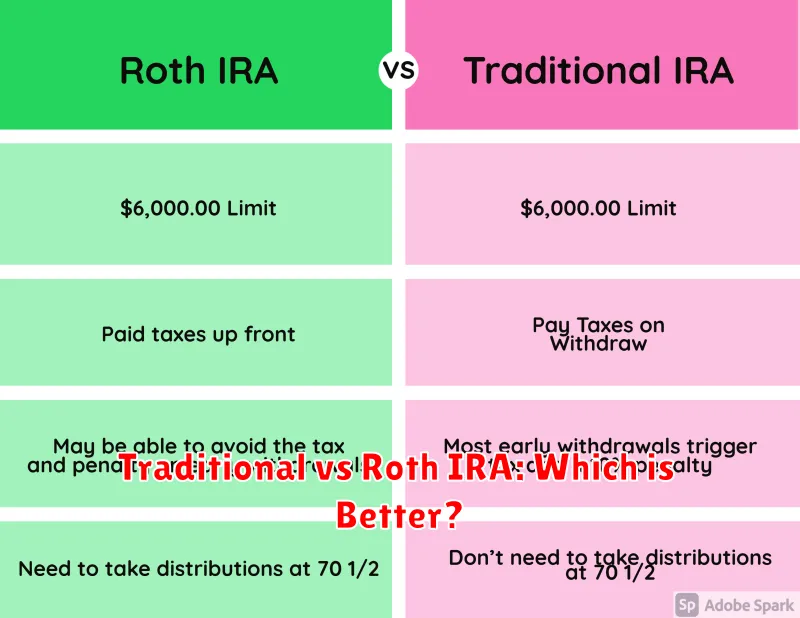
Choosing between a Traditional and Roth IRA depends heavily on your individual financial circumstances and projections. A Traditional IRA offers a tax deduction for contributions now, meaning you pay taxes on withdrawals in retirement. Conversely, a Roth IRA involves contributing after-tax dollars, but withdrawals in retirement are tax-free.
Consider a Traditional IRA if: You expect to be in a lower tax bracket in retirement than you are now. This allows you to pay less in taxes overall. It’s also beneficial if you anticipate needing to withdraw funds before age 59 1/2, as you may be able to take penalty-free withdrawals for qualified education expenses or medical bills (although the withdrawn amount is still taxed).
Consider a Roth IRA if: You expect to be in a higher tax bracket in retirement. Paying taxes now, at your lower current rate, could save you a significant amount compared to paying a higher tax rate on your withdrawals later. Further, Roth IRAs offer tax-free growth and tax-free withdrawals in retirement, making them attractive for long-term planning. Also, you can withdraw contributions (not earnings) at any time without penalty.
Ultimately, the “better” option is the one that best aligns with your personal financial situation and long-term goals. Consult with a financial advisor for personalized guidance.
401(k) Plans: Employer Matching and Benefits

A 401(k) plan is a retirement savings plan sponsored by employers. One of its key benefits is employer matching. This means your employer contributes a certain percentage of your salary to your 401(k) account, often matching a portion of your contributions.
The matching contribution is essentially free money towards your retirement. The percentage matched and the vesting schedule (the period you must work to claim the full employer contribution) vary by employer. It’s crucial to understand your employer’s matching policy to maximize your retirement savings.
Beyond employer matching, 401(k) plans offer other advantages. They often provide access to a diverse range of investment options, allowing you to diversify your portfolio. Contributions are made on a pre-tax basis, lowering your current taxable income. And depending on your plan, you might have the option of making after-tax Roth contributions, potentially leading to tax-free withdrawals in retirement.
However, withdrawal penalties may apply before age 59 1/2, and there are contribution limits set annually by the IRS.
Health Savings Accounts (HSAs) for Retirement
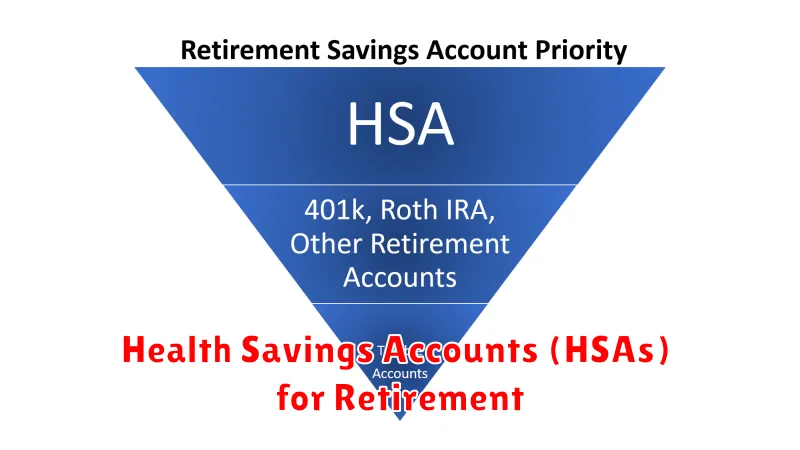
A Health Savings Account (HSA) offers a unique triple tax advantage for retirement planning. Contributions are tax-deductible, earnings grow tax-free, and withdrawals for qualified medical expenses are also tax-free.
Unlike other retirement accounts, HSAs allow for tax-free growth and withdrawal for medical expenses in retirement. This can significantly reduce healthcare costs, a major concern for many retirees.
Eligibility for an HSA requires enrollment in a high-deductible health plan (HDHP). However, the potential for tax-advantaged savings makes it a compelling retirement strategy for those who qualify.
Consider the following: HSAs are best suited for individuals who are healthy and expect relatively low medical expenses in the near future, allowing for maximum tax-advantaged growth.
In summary, HSAs provide a powerful tool for retirement planning by offering a tax-advantaged way to save for future healthcare costs. Its flexibility and triple tax benefits make it a valuable asset in a diversified retirement portfolio.
SEP and SIMPLE IRAs for Business Owners
SEP IRAs (Simplified Employee Pension plans) are straightforward retirement plans for self-employed individuals and small business owners. Contributions are made by the employer, and the contribution limit is a percentage of the employee’s compensation. This offers simplicity and flexibility, but contribution limits are lower than other plans.
SIMPLE IRAs (Savings Incentive Match Plan for Employees) are also designed for small businesses with 100 or fewer employees. Both employer and employee can contribute, with employer contributions often matching a portion of employee contributions. SIMPLE IRAs offer a balance between contribution limits and administrative simplicity compared to SEP IRAs, but contributions are subject to annual limits.
Choosing between a SEP IRA and a SIMPLE IRA depends on factors such as the number of employees, desired contribution amounts, and administrative overhead. Careful consideration of each plan’s features and limitations is crucial before making a decision.
How to Maximize Contributions to Your Retirement Account

Maximize your retirement savings by contributing the maximum allowable amount each year. This amount varies depending on the type of account (e.g., 401(k), IRA) and your age. Check with your plan provider or the IRS for the most up-to-date limits.
Automate your contributions. Set up automatic transfers from your checking account to your retirement account on a regular basis (e.g., bi-weekly or monthly). This ensures consistent contributions without requiring manual effort.
Consider making additional contributions if your income allows. Many plans allow for contributions above the minimum, enabling faster growth of your retirement nest egg.
Take advantage of any employer matching contributions offered through your 401(k) or similar plan. This is essentially free money, significantly boosting your retirement savings.
If eligible, consider making contributions to a Roth IRA. While contributions aren’t tax-deductible, withdrawals in retirement are tax-free, offering significant long-term tax advantages.
Review your contribution strategy annually. As your income changes or your retirement goals evolve, adjust your contribution amount to align with your needs.
Using Roth Conversions for Tax-Free Withdrawals
Roth conversions allow you to transfer funds from a traditional IRA or 401(k) to a Roth IRA. While you’ll pay taxes on the converted amount in the current year, subsequent withdrawals of both contributions and earnings are tax-free in retirement, provided certain conditions are met.
Key Benefits: The primary advantage is the tax-free withdrawals in retirement. This offers significant long-term tax savings compared to traditional retirement accounts where withdrawals are taxed in retirement. However, it’s crucial to consider your current tax bracket versus your projected retirement tax bracket. If you anticipate being in a lower tax bracket in retirement, a Roth conversion could be highly beneficial. Otherwise, it might be more tax-efficient to leave funds in a traditional account.
Considerations: Before performing a Roth conversion, carefully analyze your tax situation. Consult with a financial advisor or tax professional to determine the best strategy based on your individual circumstances and projected future income. Consider the potential impact on your current tax liability and the long-term tax implications.
Tax implications: It’s critical to understand that you pay taxes on the converted amount in the year of conversion, not in retirement. This means it’s important to assess your tax bracket for that year. Also, there are income limitations on Roth IRA contributions and conversions, so exceeding those limits may disqualify you from taking advantage of this strategy.
Early Withdrawal Penalties and How to Avoid Them

Many retirement accounts impose early withdrawal penalties if you access your funds before reaching a certain age, typically 59 1/2. These penalties can significantly reduce your savings and are usually a substantial percentage of the withdrawn amount, often 10%. The exact penalty varies depending on the account type.
Avoiding these penalties requires careful planning and understanding of your account options. One strategy is to only withdraw from accounts that allow penalty-free withdrawals before age 59 1/2, such as those designed for specific hardship situations (with strict IRS guidelines). Another approach involves strategically utilizing Roth IRAs, which allow penalty-free withdrawals of contributions (but not earnings) at any time.
Proper financial planning is crucial. Consider your retirement goals and timeline to determine if early withdrawals are truly necessary. If you anticipate needing access to funds before retirement, consider alternative savings vehicles outside of retirement accounts for short-term needs. Consult a financial advisor to create a personalized plan that aligns with your financial circumstances and risk tolerance.
