
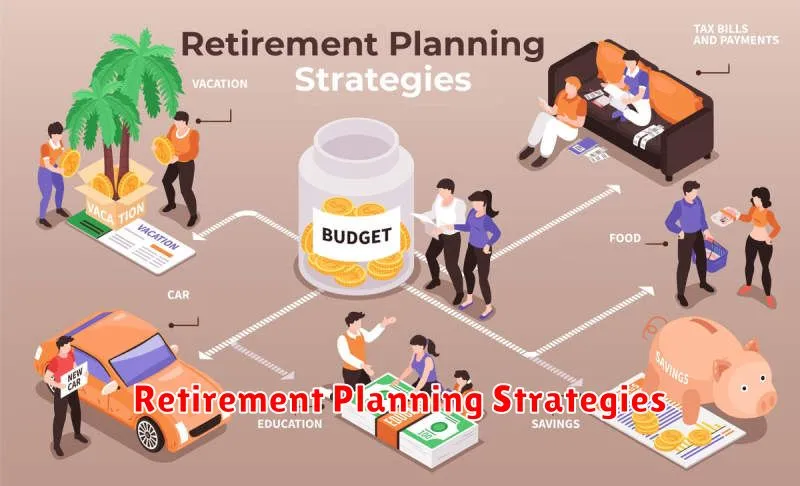
Planning for a secure retirement is crucial, and creating a bulletproof retirement plan requires careful consideration of several key factors. This comprehensive guide will equip you with the knowledge and strategies to build a financially stable future, ensuring you enjoy a comfortable and worry-free retirement. We’ll cover essential elements like retirement savings, investment strategies, pension planning, healthcare costs, and estate planning, providing practical advice to help you navigate the complexities of retirement planning and achieve your long-term financial goals.
Setting Clear Retirement Goals

Establishing clear retirement goals is the cornerstone of a successful retirement plan. This involves defining your desired lifestyle and translating it into concrete financial targets.
Consider key aspects such as your desired location, housing type, travel plans, and healthcare needs. These factors significantly influence your required retirement income.
Quantify your goals. Determine a specific retirement income needed to support your desired lifestyle. This might involve estimating annual expenses and adjusting for inflation over your retirement years.
Set realistic and attainable goals. Avoid overly ambitious targets that might lead to disappointment or unsustainable financial strategies. Regularly review and adjust your goals as life circumstances change.
Consider incorporating non-monetary goals, such as desired levels of activity, volunteer work, or personal pursuits. These contribute significantly to a fulfilling retirement experience.
Finally, document your goals clearly. This written record provides a roadmap for your retirement planning and helps to keep you focused on your objectives.
Calculating Your Retirement Needs

Accurately calculating your retirement needs is crucial for building a bulletproof retirement plan. This involves projecting your future expenses and determining how much income you’ll require to maintain your desired lifestyle.
Start by estimating your annual expenses in retirement. Consider factors like housing, healthcare, food, transportation, and leisure activities. Remember to account for potential inflation, which will likely increase the cost of goods and services over time. A common rule of thumb is to aim for replacing 80% of your pre-retirement income, but this can vary based on individual circumstances.
Next, determine your retirement income sources. This might include Social Security benefits, pensions, and personal savings. Carefully consider the timing and amount of each income stream. You may use online retirement calculators to help with these projections, though consulting a financial advisor is always recommended for personalized guidance.
Finally, compare your projected retirement expenses to your estimated retirement income. The difference represents the retirement savings gap you need to address. This analysis will inform your investment strategy and savings goals, ensuring you accumulate enough assets to fund your desired retirement lifestyle.
Choosing the Right Retirement Accounts

Choosing the right retirement accounts is crucial for building a secure financial future. The best choice depends on your individual circumstances, including your income, tax bracket, risk tolerance, and retirement timeline.
401(k)s and similar employer-sponsored plans often offer matching contributions, essentially free money. These plans typically offer a variety of investment options and tax advantages. However, your investment choices might be limited.
Traditional IRAs offer tax-deductible contributions, reducing your current taxable income. However, withdrawals in retirement are taxed. Roth IRAs, conversely, involve contributions made after tax, but withdrawals in retirement are tax-free. The best choice depends on your projected tax bracket in retirement.
SEP IRAs are designed for self-employed individuals and small business owners. They offer higher contribution limits than traditional or Roth IRAs but have stricter rules regarding eligibility and contributions.
Careful consideration of each account’s features, including contribution limits, tax implications, and investment options, is vital. Consulting a financial advisor can help determine which accounts best align with your specific retirement goals and risk profile.
How to Diversify Retirement Investments

Diversification is crucial for a bulletproof retirement plan. It reduces risk by spreading your investments across different asset classes, minimizing the impact of poor performance in any single area.
A well-diversified portfolio typically includes a mix of stocks, bonds, and cash equivalents. Within stocks, consider diversifying across different sectors (e.g., technology, healthcare, energy) and market capitalizations (large-cap, mid-cap, small-cap).
Bonds offer stability and can act as a counterbalance to the volatility of stocks. Consider diversifying bond holdings by maturity date and issuer (government, corporate).
Real estate and alternative investments (such as commodities or precious metals) can also be part of a diversified portfolio, providing further risk mitigation and potential for growth. However, these often come with higher risk and illiquidity.
Your investment timeline is a key factor. Younger investors generally have a higher risk tolerance and can allocate a larger portion of their portfolio to stocks. As retirement nears, shifting towards a more conservative approach with a greater allocation to bonds is recommended.
Regularly rebalance your portfolio to maintain your desired asset allocation. Market fluctuations will cause the proportions of your investments to drift over time; rebalancing ensures you stay on track with your risk tolerance and long-term goals.
Consider consulting with a qualified financial advisor for personalized advice tailored to your specific circumstances and risk profile. They can help you create a diversified investment strategy that aligns with your retirement objectives.
The Role of Annuities in Retirement Planning

Annuities can play a significant role in a bulletproof retirement plan by providing a guaranteed stream of income during retirement. This is particularly valuable for mitigating the risk of outliving your savings.
There are various types of annuities, each with different features and benefits. Fixed annuities offer a predictable, fixed rate of return, while variable annuities provide the potential for higher returns but also carry greater risk. Indexed annuities offer a balance, linking returns to a market index while providing principal protection.
A key advantage of annuities is the potential for tax deferral. Investment earnings grow tax-deferred until withdrawn, allowing for greater accumulation over time. However, it’s crucial to understand the associated fees and surrender charges before investing.
Annuities should be considered as part of a diversified retirement strategy, not a stand-alone solution. They’re most effective when used in conjunction with other retirement vehicles, such as 401(k)s and IRAs, to create a comprehensive and secure retirement income plan. Careful consideration of your individual financial goals and risk tolerance is essential when determining the suitability of annuities for your retirement planning.
Planning for Healthcare Costs in Retirement

Healthcare is a significant, often underestimated, expense in retirement. Planning for these costs early is crucial to a secure financial future.
Estimate your healthcare expenses. Consider factors like age, health history, and potential long-term care needs. Online calculators and consultations with financial advisors can help.
Explore available insurance options. Medicare is a key component, but supplemental insurance (Medigap) and Part D prescription drug coverage are often necessary. Investigate the costs and benefits of each.
Save aggressively. Healthcare costs can rise unexpectedly. Contribute consistently to retirement accounts and consider setting aside a dedicated healthcare savings fund.
Consider long-term care insurance. This can help cover expenses associated with nursing homes or in-home care, which can be extraordinarily costly.
Review your plan regularly. Healthcare costs and insurance options change. Regularly review your strategy to ensure it continues to meet your needs.
How to Reduce Taxes on Retirement Income

Minimizing your tax burden during retirement is crucial for maximizing your financial security. Several strategies can significantly reduce the taxes you pay on your retirement income.
Tax-advantaged accounts such as 401(k)s and traditional IRAs offer tax deferral, meaning you don’t pay taxes on the money until you withdraw it in retirement. However, withdrawals are taxed as ordinary income. Roth IRAs, conversely, offer tax-free withdrawals in retirement, provided certain conditions are met. Contributions are made after-tax, but qualified withdrawals and growth are tax-free.
Strategic withdrawals can also help minimize your tax liability. Consider withdrawing from taxable accounts first to preserve tax-advantaged funds for later. Diversifying your income streams can help you avoid pushing yourself into a higher tax bracket.
Tax-loss harvesting, while typically used for investment accounts, can be applied to taxable retirement accounts. Selling losing investments to offset capital gains can reduce your overall tax bill.
Consult a financial advisor. They can help you develop a personalized tax reduction strategy tailored to your specific circumstances and retirement goals. A qualified tax professional can offer further advice on optimizing your tax situation.
Proper planning is essential for minimizing your tax burden throughout your retirement years. Understanding the tax implications of various retirement accounts and employing strategic withdrawal methods will significantly impact your overall retirement income.
Creating an Estate Plan for a Secure Retirement

A comprehensive estate plan is crucial for a secure retirement. It ensures your assets are distributed according to your wishes, minimizing potential family conflicts and tax burdens.
Key components of an effective estate plan include a will, outlining how your property will be distributed after your death; a durable power of attorney, designating someone to manage your finances if you become incapacitated; and a healthcare power of attorney (or advance directive), specifying your wishes regarding medical care. Consider also a living trust to manage assets during your lifetime and streamline distribution after your death, potentially minimizing probate costs and delays.
Regular review of your estate plan is essential, especially after significant life changes such as marriage, divorce, birth of a child, or substantial changes in assets. Consult with an estate planning attorney to create a plan tailored to your specific needs and circumstances. They can guide you through the complexities of estate laws and help you make informed decisions to protect your legacy.
Careful planning now will offer peace of mind, ensuring your retirement savings and other assets are handled efficiently and according to your preferences, providing financial security for yourself and your loved ones well into the future. This contributes significantly to a bulletproof retirement strategy.
